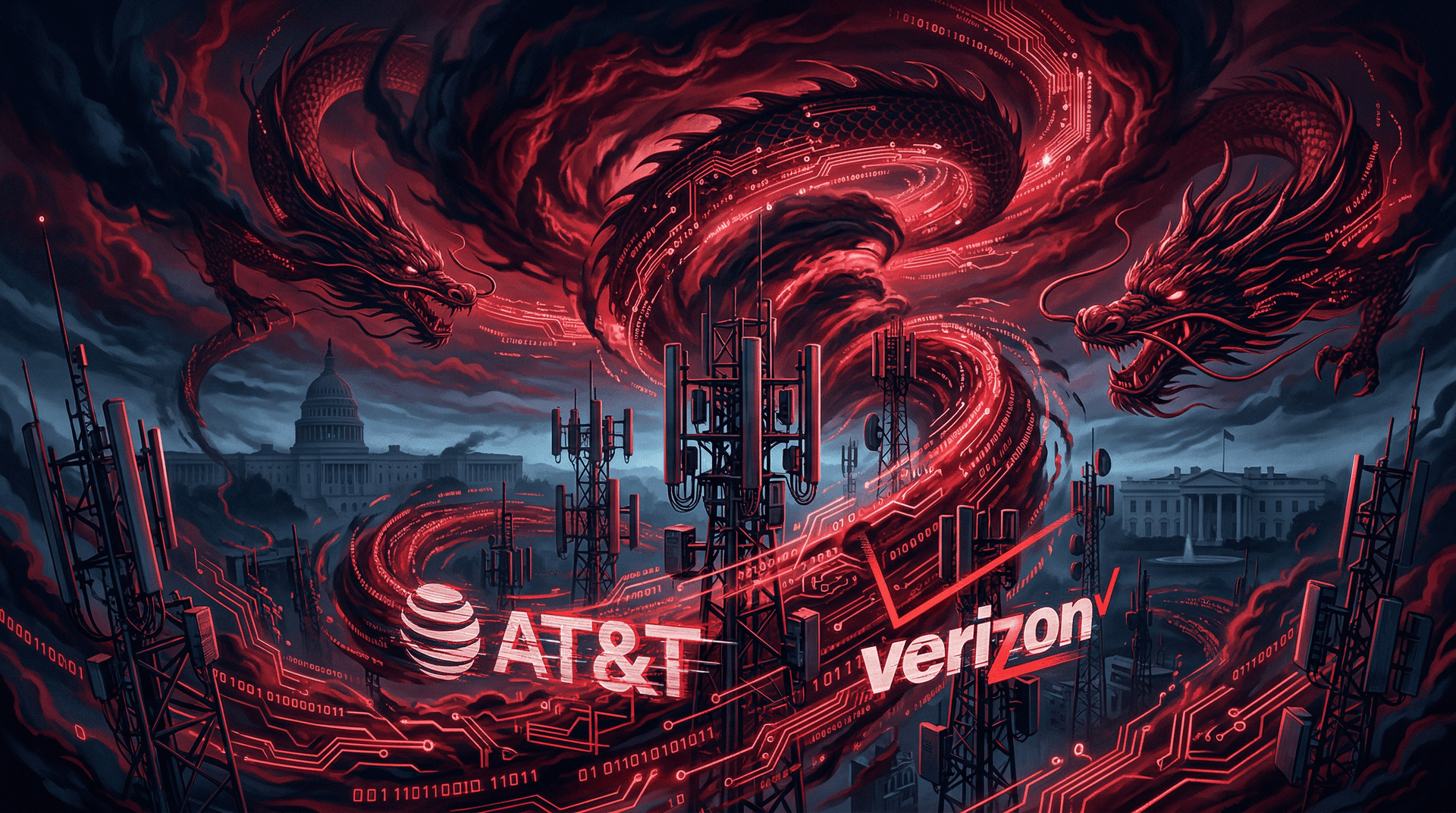
Washington, DC – December 29, 2024 – In a stark warning to the nation, the FBI and Cybersecurity and Infrastructure Security Agency (CISA) unveiled details of a sophisticated cyber espionage operation dubbed 'Salt Typhoon' on December 18. Attributed to Chinese state-sponsored actors, the hackers breached at least nine US telecommunications companies, including heavyweights like AT&T, Verizon, and Lumen Technologies. The intrusion allowed access to wiretap systems and the exfiltration of metadata, call records, and potentially audio intercepts targeting high-profile US government officials and political figures.
The Scope of the Breach
The campaign, ongoing for at least two years, exploited vulnerabilities in network management tools and customer premise equipment. According to the joint advisory, the intruders gained unauthorized access to systems used for lawful surveillance requests under court orders. This positioned them to harvest vast troves of communications data from Americans, particularly those under government scrutiny.
'Salt Typhoon' is linked to the notorious APT41 group, also known as Winnti or Wicked Panda, a hacking collective with ties to China's Ministry of State Security. The group has a history of blending espionage with financially motivated cybercrime, making it one of the most prolific threats facing Western infrastructure.
High-profile targets reportedly included members of the Trump administration, Vice President-elect JD Vance, and other senior officials. Sources familiar with the investigation told AM Lens News that the hackers monitored calls and texts, potentially capturing unencrypted content. While no evidence of tampered data has surfaced, the breach underscores the fragility of critical infrastructure.
Telecom Response and Federal Action
Affected providers acted swiftly upon detection. AT&T confirmed compromises but stated no customer data was directly accessed beyond lawful intercepts. Verizon echoed similar assurances, emphasizing enhanced monitoring. Lumen Technologies, formerly CenturyLink, faced deeper penetration, with hackers lingering in networks for months.
The FBI has been leading the response since early 2024, notifying victims and coordinating mitigations. CISA's advisory urges organizations to hunt for indicators of compromise (IoCs), including specific IP addresses, malware hashes, and tactics like living-off-the-land techniques. 'This is a call to action for all critical infrastructure sectors,' CISA Director Jen Easterly stated in a press briefing.
Federal officials disrupted some command-and-control infrastructure, but the hackers retain footholds in select networks. The advisory details tools like 'GhostSpider' backdoor and 'HCrown' loader, custom malware enabling persistent access.
Geopolitical Ramifications
The revelation comes amid heightened US-China tensions over Taiwan, trade, and technology. President Biden's administration had previously sanctioned Chinese entities for similar activities, but critics argue responses lack teeth. Incoming Trump officials have vowed aggressive countermeasures, including tariffs and export controls.
Cybersecurity experts warn this is part of a broader pattern. 'Salt Typhoon represents the maturation of Chinese cyber capabilities,' said Dmitri Alperovitch, co-founder of CrowdStrike. 'They're not just spying; they're positioning for disruption in a conflict scenario.'
In September 2024, Microsoft first flagged related activity under 'Storm-0062,' but the telecom focus emerged later. The operation's scale rivals past campaigns like SolarWinds, though stealthier.
Technical Breakdown
Attackers initiated via phishing and supply-chain compromises, then escalated privileges using zero-day exploits. Once inside, they routed traffic through compromised routers, blending into legitimate noise. Tools included:
- Custom implants: For persistence and data staging.
- Proxy networks: VPNs and SSH tunnels to mask origins.
- Living-off-the-land binaries (LOLBins): Abusing tools like PowerShell and Netsh.
Defenses recommended include multi-factor authentication (MFA), network segmentation, and endpoint detection with behavioral analytics. Patching known flaws in Cisco and other gear is critical.
Industry and Policy Implications
Telecoms, handling 90% of US voice traffic, are prime targets. The breach exposes risks in shared infrastructure, where one weak link endangers all. Lawmakers, including Sen. Mark Warner (D-VA), called for hearings, demanding transparency on data scope.
The FCC and NTIA are reviewing regulations, potentially mandating stricter cybersecurity standards akin to Europe's NIS2 directive. Private sector leaders advocate public-private partnerships, citing successes like the Joint Cyber Defense Collaborative (JCDC).
Lessons for Businesses
This incident reinforces timeless cybersecurity tenets: 1. Assume breach: Hunt proactively with threat intel. 2. Segment networks: Limit lateral movement. 3. Vet vendors: Supply chains are attack vectors. 4. Collaborate: Share IoCs via ISACs.
As 2024 closes, 'Salt Typhoon' serves as a harbinger. With elections, corporate espionage, and hybrid warfare rising, vigilance is paramount. US officials affirm containment progress but caution the threat persists.
AM Lens News will continue monitoring developments.
Word count: 912