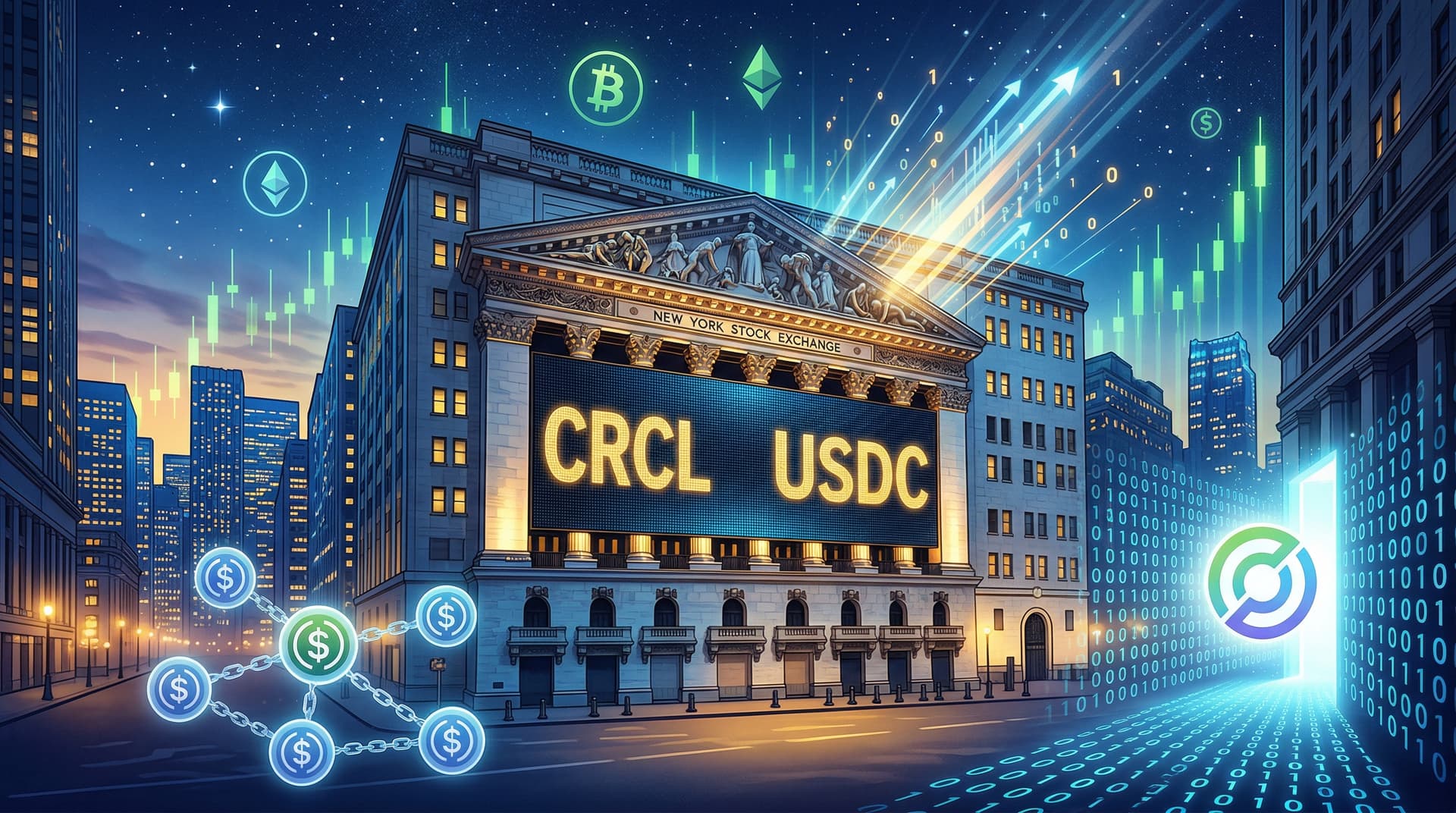
New York, November 14, 2024 – In a significant development for the fintech landscape, Circle Internet Financial, the company behind the second-largest stablecoin USDC, announced on November 12 that it has confidentially submitted a draft registration statement to the U.S. Securities and Exchange Commission (SEC) for a proposed initial public offering (IPO) of its Class A common stock. The shares are expected to list on the New York Stock Exchange under the ticker symbol “CRCL.”
This filing reignites Circle's long-standing ambition to go public, coming at a time when cryptocurrency markets are experiencing a robust resurgence. Bitcoin has surged past $90,000 following Donald Trump's election victory on November 5, buoyed by promises of a more crypto-friendly regulatory environment, including the potential establishment of a national Bitcoin reserve.
Background on Circle and USDC
Founded in 2013 by Jeremy Allaire and Sean Neville, Circle has positioned itself as a bridge between traditional finance and the digital asset world. Its flagship product, USD Coin (USDC), launched in 2018 in partnership with Coinbase through the Centre Consortium, is a fully reserved stablecoin pegged 1:1 to the U.S. dollar. USDC holds reserves primarily in cash and short-term U.S. Treasuries, ensuring redeemability and transparency via monthly attestations from Deloitte.
As of November 2024, USDC boasts a market capitalization exceeding $35 billion, trailing only Tether's USDT at around $130 billion. Circle's stablecoin has become integral to DeFi protocols, cross-border payments, and trading on major exchanges. The company's revenue streams include interest on reserves, transaction fees, and blockchain infrastructure services through its Cross-Chain Transfer Protocol (CCTP).
In the first half of 2024, Circle reported revenues of $779 million, a sharp increase from prior periods, driven largely by yields on its reserves amid high interest rates. This financial strength underscores the viability of stablecoin issuers as profitable fintech entities.
Previous IPO Attempts and Market Timing
Circle's path to IPO has been fraught with challenges. It first confidentially filed for an IPO in January 2024 via a Form S-1, revealing robust financials but facing a tepid market for tech listings. The broader IPO drought, exacerbated by high interest rates and regulatory scrutiny, led Circle to withdraw its application in May 2024 without prejudice.
The refiling now aligns with a thawing IPO market. Notable successes like Reddit and Astera Labs earlier in 2024, combined with the post-election crypto euphoria, have created favorable conditions. Coinbase, Circle's early partner and a publicly traded crypto exchange since 2021 (NASDAQ: COIN), has seen its stock more than double year-to-date, providing a benchmark for crypto-native firms.
"Going public has always been part of our long-term strategy," Allaire stated in the announcement. "This step reflects our commitment to transparency, accountability, and scaling USDC as the leading dollar digital currency."
Implications for Fintech and Crypto
Circle's IPO could catalyze further mainstream adoption of stablecoins in fintech. With USDC integrated into platforms like Visa, Mastercard, Stripe, and Shopify, it facilitates seamless dollar transfers on blockchains, reducing costs for remittances and e-commerce.
Post-election, Trump's pro-crypto stance—vowing to fire SEC Chair Gary Gensler and end what he calls a "war on crypto"—has investors optimistic. Venture capital inflows into crypto startups hit $4.9 billion in Q3 2024, per PitchBook, with stablecoins at the forefront.
However, challenges persist. Tether dominates with higher liquidity, though it faces ongoing questions about reserve transparency. Regulatory clarity remains elusive; the SEC's stance on stablecoins as potential securities could impact Circle. Proposed legislation like the Clarity for Payment Stablecoins Act, reintroduced in 2024, aims to provide a framework, potentially benefiting compliant issuers like Circle.
Competitive Landscape
Circle isn't alone. Competitors include:
- Paxos (USDP, BUSD remnants): Focused on regulated stablecoins but smaller scale.
- MakerDAO (DAI): Decentralized but volatile peg.
- Ripple (RLUSD): Newly launched in late 2024, targeting payments.
Banks are entering too: JPMorgan's JPM Coin and Societe Generale's EURCV signal institutional interest. PayPal's PYUSD, though nascent, leverages its vast user base.
Circle's edge lies in its enterprise focus. Partnerships with BlackRock for tokenized funds and its role in EU's MiCA-compliant stablecoins position it well globally.
Financial Snapshot and Investor Outlook
From its withdrawn S-1: | Metric | H1 2024 | FY 2023 | |---------------------|--------------|--------------| | Revenue | $779M | $1.45B? | | Net Income | Profitable | Profitable | | USDC Circulation | ~$32B avg | ~$25B avg |
Estimated based on public reports.
Analysts project Circle's valuation could exceed $5-9 billion, akin to its 2022 SPAC peak, adjusted for market conditions. Lead underwriters Goldman Sachs, JPMorgan, and Morgan Stanley bring Wall Street heft.
Broader Fintech Impact
This IPO underscores fintech's evolution from payments (e.g., Stripe, valued at $70B privately) to programmable money. Stablecoins processed $10 trillion in volume in 2024, rivaling Visa. For AM Lens News readers, it highlights investment opportunities: expect ETF approvals for more crypto products, tokenized real-world assets, and CBDC pilots.
Risks include macroeconomic shifts—falling rates could squeeze reserve yields—and geopolitical tensions affecting dollar hegemony.
As Circle advances toward listing, expected in 2025 pending SEC review, it symbolizes crypto's maturation. In a world of digital finance, stablecoins like USDC are the on-ramp to blockchain's promise of efficiency and inclusion.
Jeremy Allaire is Circle's Co-Founder and CEO. This article draws from public filings and statements as of November 14, 2024.
(Word count: 912)