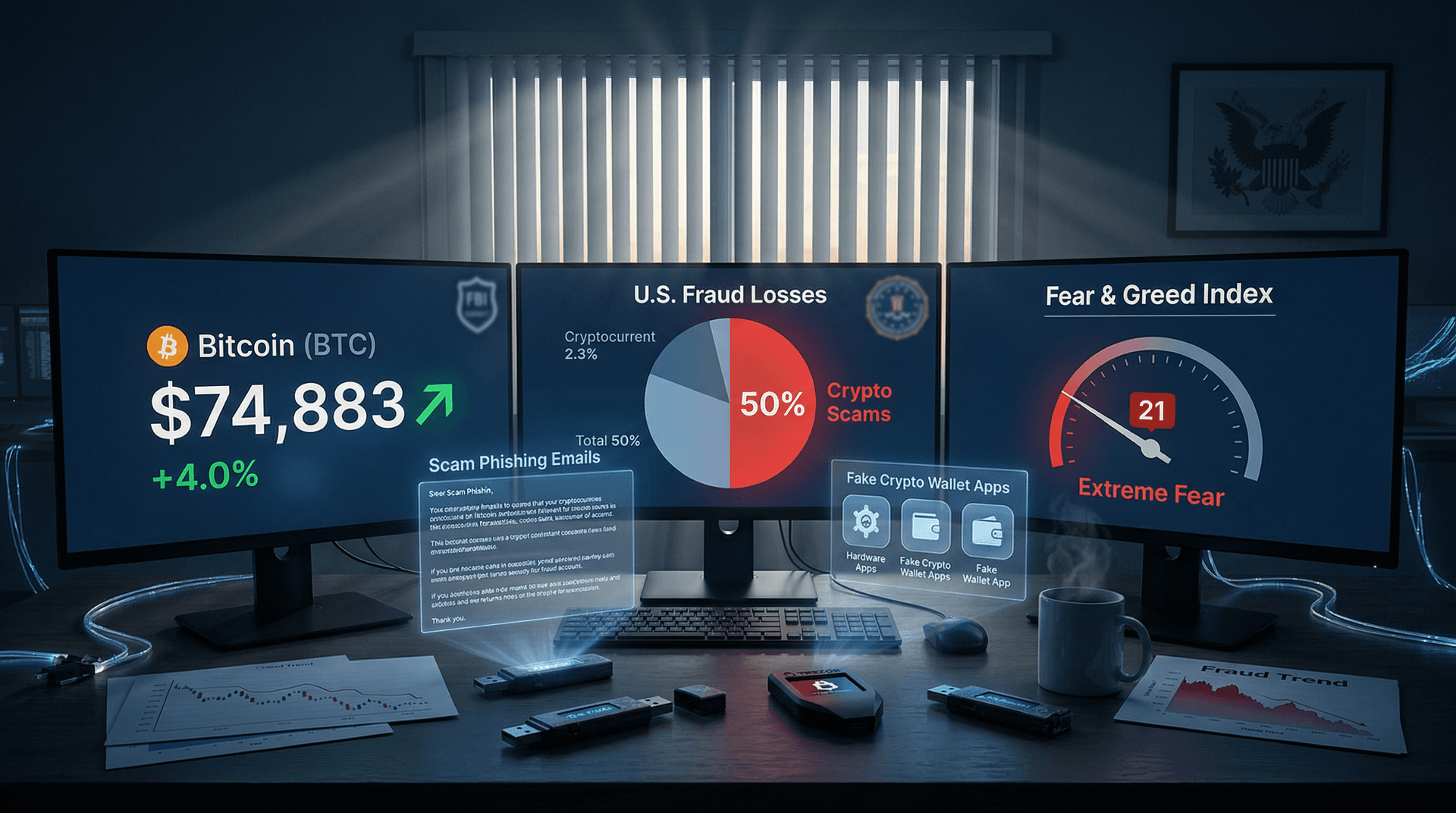
- Crypto scams fraud losses hit 50% of 2025 U.S. fraud total ($3.9B USD), per FBI IC3.
- Bitcoin at $74,883 USD (+4.0%) per CoinGecko amid extreme fear.
- Fear & Greed Index at 21 signals investor panic over rising scams.
By Sophie Anderson
April 14, 2026
The FBI's Internet Crime Complaint Center (IC3) reports crypto scams fraud losses accounted for 50% of all U.S. fraud losses in 2025, totaling $3.9 billion USD in its annual report released today.
This dominance underscores digital finance vulnerabilities. Fintech firms must prioritize cybersecurity to protect users and markets.
FBI IC3 Report: Crypto Scams Fraud Losses Dominate 2025
The IC3 aggregates nationwide victim complaints. Its 2025 annual report shows crypto scams fraud losses reached $3.9 billion USD, up 25% from $3.1 billion USD in 2024 per FBI data. IC3 annual report.
Scammers launched fake investment sites and pig-butchering operations—romance scams building trust before pushing fraudulent crypto investments. Victims lost funds laundered through mixers and offshore exchanges.
Traditional banks faced fewer losses due to strong safeguards. Fintech platforms like Coinbase and Binance process billions USD daily but suffer from inconsistent verification.
The IC3 notes crypto complaints rose 35% year-over-year, signaling a persistent trend.
Crypto Markets Show Extreme Fear Amid Rebound
Bitcoin trades at $74,883 USD, up 4.0% per CoinGecko data as of April 14. Ethereum reached $2,343.31 USD (+5.5%). BNB hit $620.18 USD (+2.8%). XRP climbed to $1.37 USD (+2.2%).
The Fear & Greed Index—a sentiment gauge from Alternative.me—sits at 21, deep in extreme fear territory. Scam surges fuel caution, spurring wallet withdrawals.
Institutional inflows drive short-term rebounds. Yet fintech apps promoting yield farming expose retail investors to high-risk environments amid eroding trust.
Cybersecurity gaps cap sustainable market growth.
Fintech Cybersecurity Gaps Fuel Crypto Scams Fraud Losses
Attackers use social engineering on dating apps and Telegram groups. They promise outsized returns, then execute rug-pulls—sudden project abandons draining liquidity.
Fintech expands access via mobile wallets and DeFi platforms. Users often bypass KYC with hardware keys, but phishing attacks persist.
Shared keys undermine even strong protections. Multi-signature wallets and biometrics provide superior defenses.
Chainalysis 2025 Crypto Crime Report details scammer tactic evolutions, urging blockchain tracing tools at exchanges.
Regulators now mandate Chainalysis integration for better visibility.
Prevention Steps and Emerging Tech Counter Scam Threats
Users must reject 100% return promises. Always verify URLs and enable 2FA everywhere. Store keys offline using Ledger or Trezor hardware wallets. Ignore unsolicited token offers.
Fintechs implement AI to flag unusual transfers. Real-time alerts stop suspicious activity.
Reuters on FTC warnings aligns with IC3, noting record scam impacts.
Zero-knowledge proofs boost privacy securely. Layer-2 solutions cut mixer needs. NIST's post-quantum cryptography standards fortify against future threats. Decentralized IDs verify without data leaks, blocking phishing.
Regulators and Markets React to Crypto Scams Fraud Losses
The SEC ties ETF approvals to enhanced reporting. States launch app-based scam education.
AI scales fraud detection across platforms. Fintech stocks dip after breaches as investors bake in cyber risks.
Scams now hit retirement apps with crypto ETFs and bank USDT integrations at $1.00 parity. Elders face romance scams most—family education saves fortunes.
IC3 quarterly data due April 30, 2026, will monitor crypto scams fraud losses trends. Proactive innovation ensures fintech growth outpaces threats.
This article was generated with AI assistance and reviewed by automated editorial systems.