
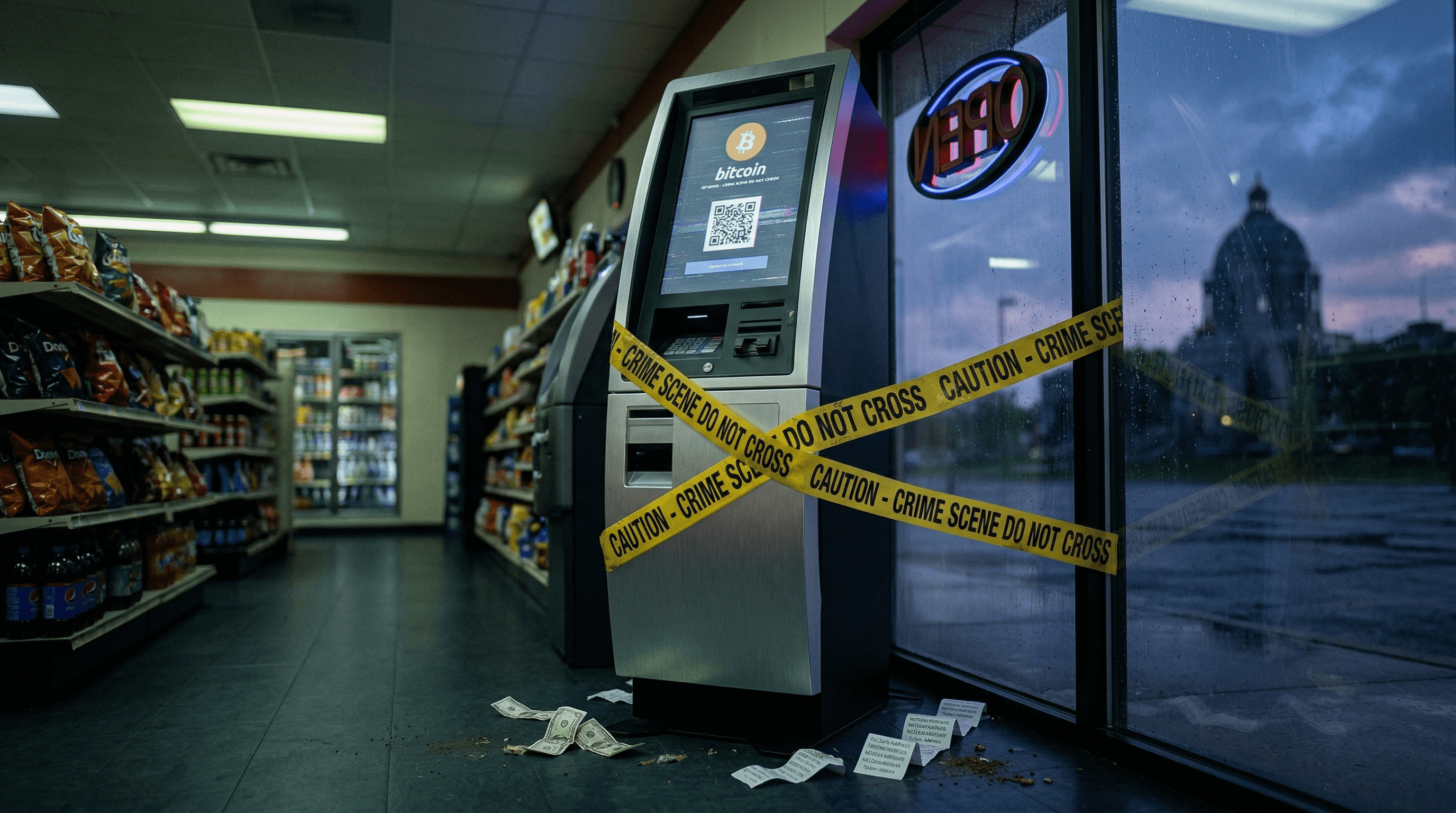
Minnesota crypto kiosk ban passed the Senate on April 11, 2026. Lawmakers cited over $10 million USD in scams linked to these machines since 2023, per Minnesota Attorney General data.
Investors react with caution. Bitcoin fell 0.5% to $72,722 USD today. The Fear & Greed Index sits at 15, extreme fear per Alternative.me. Ethereum dropped 0.2% to $2,243.08 USD. This move challenges crypto's retail expansion.
Kiosks Fueled Easy Scams
Crypto kiosks allow cash purchases of Bitcoin at gas stations and malls. Operators like Bitcoin Depot manage over 8,000 nationwide, company filings state. Minnesota hosted 150 machines that generated $28 million USD in volume last year, state records show.
Scammers exploit them. Fraudsters promote QR codes for fake wallets and vanish with funds. Victims lost $10.2 million USD from January 2023 to March 2026, Minnesota Department of Commerce reports. Fees reach 15-20% per operator disclosures, exceeding exchange rates.
The bill awaits House approval. Governor Tim Walz backs it, his office confirmed on April 11. Kiosks must close by July 1 if signed into law.
Market Dips Reflect Caution
Bitcoin declined 1.2% over the past week, CoinMarketCap data shows. XRP fell 1.2% to $1.34 USD today. BNB dropped 0.5% to $604.84 USD. USDT stayed at $1.00 USD.
Wall Street deems this noise. Data suggests otherwise. Such regulations slow new user on-ramps. Coinbase stock fell 0.8% in premarket trading, Nasdaq quotes show. Fintech valuations encounter headwinds.
Recall New York's 2018 BitLicense. Bitcoin plunged 65% from its $17,000 USD peak by December that year. Minnesota's action signals similar caution.
Fintech Firms Scramble
Operators resist. Bitcoin Depot lobbied against the bill, claiming kiosks serve unbanked users. Their Q1 2026 earnings call on April 10 forecasted 10% revenue growth from kiosks.
Reality strikes. The company removed 20 machines from Minnesota last month, SEC filings reveal. Competitors like Coinhub face 25% higher compliance costs, Chainalysis analyst estimates indicate.
Cybersecurity firms applaud. Chainalysis tracked $1.7 billion USD in global kiosk scams last year. Bans shift users to apps with stronger KYC, curbing anonymous fraud.
Scammers Pivot Fast
Bans do not halt crime. New York restricted unlicensed kiosks in 2022. Scams moved to P2P apps like LocalBitcoins, FBI reports note. Losses climbed 18% afterward.
Minnesota fraudsters seek options. Telegram bots and Venmo trades rose 30% after California's 2024 rules, TRM Labs data confirms. Nationwide P2P volumes reach $2 billion USD monthly.
Hackers evolve. Phishing sites imitate exchanges and stole $500 million USD in 2025, Certik audits state. Kiosk bans drive retail to riskier paths without addressing core issues.
Why the Minnesota Crypto Kiosk Ban Matters
Victims lose $5,000 USD per kiosk scam on average, FTC data states. Minnesota recorded 1,200 victims since 2023, averaging age 55 and skewing toward retirees.
Fintech stalls. Banks like Chase grew crypto desks last year. Such rules deter partnerships. Red states see slower adoption.
The broader economy notices. Crypto on-ramps drive $100 billion USD annual volume, Ark Invest estimates. Inconsistent rules fragment markets and widen spreads by 50 basis points.
Investor Action Steps
1. Avoid kiosks. Choose regulated exchanges like Coinbase or Kraken. Their fees average 0.5% versus 15% at machines.
2. Monitor Fear & Greed daily. At 15 today, consider dips below $70,000 USD if volume rises 20%, TradingView metrics suggest.
3. Secure wallets. Use 2FA and hardware keys. Ledger Nano users experience 99% fewer hacks, company stats show.
Watch the House vote next week. Approval solidifies the trend. Bitcoin under $70,000 USD by April 18 forecasts more pressure. Hold cash if Treasury yields exceed 5%.
Long-Term Cybersecurity Shift
Legislation trails technology. Blockchain forensics firm Elliptic boosted revenue 40% last year by tracking scams. AI tools detect 85% of suspicious transactions, per their April 2026 whitepaper.
Minnesota joins 12 states with kiosk rules. Texas investigates operators after $15 million USD losses, state AG data shows. Congress considers federal measures, Bloomberg reported April 11.
Crypto advances through challenges. The early internet endured 1998 spam bans before adoption surged. Kiosks will adapt with compliance rather than disappear.
Users benefit long-term from the Minnesota crypto kiosk ban. Cleaner on-ramps foster trust. Bitcoin's $1.4 trillion USD market cap persists, though retail access tightens. Track state laws weekly at CoinCenter.org.