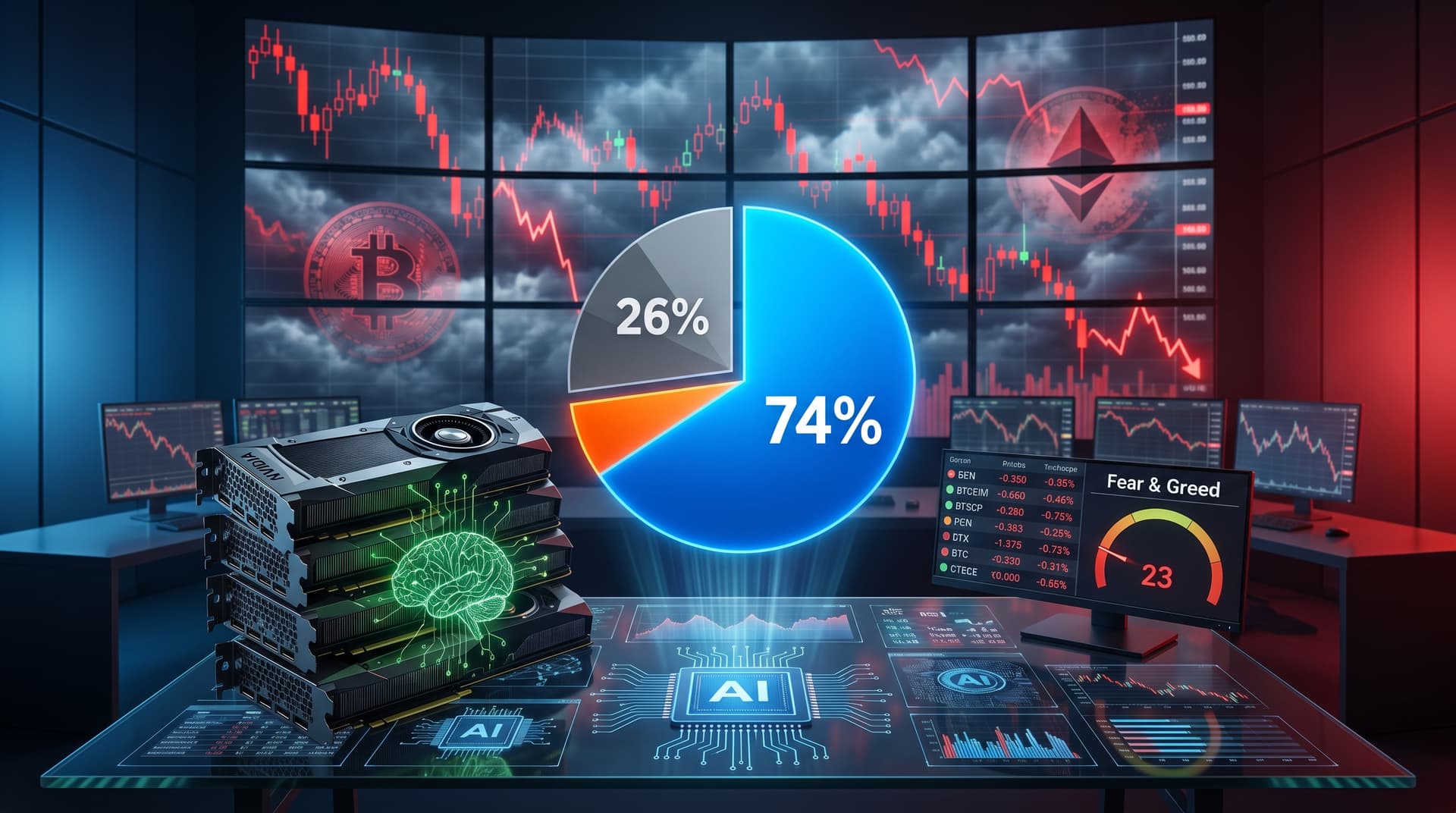
- Nvidia portfolio allocates 74% to two AI stocks.
- Fear & Greed Index falls to 23, extreme fear level.
- Bitcoin drops 2.2% to USD 73,962.
By Kevin Nakamura
Key Takeaways
- Nvidia portfolio allocates 74% to two AI stocks.
- Fear & Greed Index drops to 23, signaling extreme fear.
- Bitcoin falls 2.2% to USD 73,962.
Nvidia portfolio allocates 74% to two AI stocks, Yahoo Finance reports on April 15, 2026. This concentration shows strong belief in AI despite market turbulence.
The Fear & Greed Index from alternative.me stands at 23. This extreme fear level often signals buying opportunities for risk assets, based on historical patterns.
Nvidia Portfolio Concentration Risks
Analysts at Morningstar emphasize diversification needs. Nvidia portfolio places 74% in two holdings, which defies standard advice. One adverse event could cause major losses.
The 2000 dot-com bust provides context. Cisco shares dropped 80% due to hype, according to S&P historical data. Nvidia leads AI through GPUs that power OpenAI and similar firms, supported by strong cash flows.
Trading desks at Goldman Sachs observe that concentrated positions boost gains in uptrends but amplify pain in declines.
Crypto Fear Spills to AI Stocks
Crypto market declines fuel broader anxiety. Bitcoin trades at USD 73,962 on CoinGecko as of April 15, 2026, down 2.2%. Ethereum falls 1.3% to USD 2,338.57.
XRP dips 0.4% to USD 1.37. BNB declines 0.8% to USD 619.74. USDT holds steady at USD 1.00.
The Fear & Greed Index at 23 echoes March 2020 lows, when Bitcoin fell below USD 4,000 before a sharp recovery, per alternative.me data. AI stocks risk similar spillover.
Hyperscalers such as Amazon, Microsoft, and Google might reduce capital spending, which could hit Nvidia revenue. The portfolio focuses on supply chain partners, Nvidia's SEC filings confirm.
Nvidia's AI Dominance Fuels Portfolio Bet
Nvidia controls the AI chip market. Data center revenue jumped 409% year over year to USD 18.4 billion in Q4 FY2024, Nvidia's earnings release shows.
Blackwell chips now enter production, boosting efficiency. Hyperscalers expand AI clusters and seek Nvidia's H100s despite shortages.
The two stocks target memory suppliers and manufacturers. McKinsey forecasts USD 13 trillion in AI economic value by 2030.
Critics point to potential bubbles and regulations, yet Nvidia positions itself for long-term growth.
Market Jitters Test Nvidia Portfolio Strength
Fear & Greed at 23 prompts selling. Retail investors exit crypto, while funds cut tech positions. Nasdaq eases amid rate hike concerns.
Nvidia stock resists the pressure thanks to steady AI demand. CEO Jensen Huang supports the portfolio strategy.
In 2022, Bitcoin plunged 65% and Nvidia dropped 50% before doubling on AI momentum, Yahoo Finance charts indicate.
Federal Reserve pauses on rate cuts raise expenses, but enterprise AI grows through Nvidia Jetson platforms.
Bitcoin Drop Highlights Beta Risks
Bitcoin's 2.2% decline pulls altcoins lower. GPU miners sell equipment. Nvidia shifts to secondary computing uses.
After the Ethereum Merge, AI applications repurpose mining gear.
The 2018 crypto winter affected semiconductors before Nvidia recovered strongly.
Fear & Greed readings below 20 indicate capitulation, while levels above 40 spark rallies.
Trading Implications for Nvidia Portfolio
Traders view Nvidia as the AI market leader. The 74% allocation seeks high returns.
Retail investors buy ARKK ETFs with Nvidia stakes. JPMorgan strategists run tail-risk models.
S&P data reveals index funds beat star stocks over time. Nvidia navigates volatility to capture upside.
Outlook Hinges on Fear & Greed Shift
AI demand surges forward. Sovereign wealth funds in UAE and Saudi Arabia develop clusters.
Nvidia portfolio remains solid with USD 30 billion in cash from the latest SEC 10-Q filing. An unwind appears unlikely.
Fear & Greed under 30 drives sales pressure, but over 50 signals a boom. Next earnings reports will shape the Nvidia portfolio direction.
This bold Nvidia portfolio approach cements AI leadership. Success elevates the sector, while setbacks reveal vulnerabilities.
This article was generated with AI assistance and reviewed by automated editorial systems.